

This post was written by Sarah Mohrman, RDN, LD, MA, dietitian, program coordinator, Parkview Heart Institute.
Nutrition is an evolving science; therefore, it is recommended that the dietary guidelines for Americans be updated to reflect the latest research every five years. Typically, the guidelines remain similar for the most part and do not veer far from the previous standards. However, this year, while many recommendations remained the same, some parted from evidence-based standards. This prompted many professional organizations, such as the American Heart Association, the Academy of Nutrition and Dietetics and the American College of Cardiology to step forward to make statements or expert analysis.
To clear the air, the Parkview Heart Institute dietitians summarized some of the changes and what someone trying to follow a heart-healthy diet should focus on.
What you should remove from your diet
Although this is not necessarily a new suggestion, the 2025-2030 Dietary Guidelines encourage Americans to remove added sugars, refined grains and highly processed or “ultra processed foods.” These foods are typically full of empty calories and artificial ingredients, low in nutritional value and fiber and linked to chronic diseases such as heart disease, diabetes, cancer and more. Examples of these foods would be candy, sodas, sugary cereals, white breads, hot dogs, chicken nuggets and potato chips.
Dietitian tip: Approximately 70% of food items purchased at a grocery store are considered ultra processed foods. Try to purchase the majority of your foods from the perimeter of the store, where you will find fresh fruits, vegetables, lean meats, plant proteins, dairy, etc. Venture down the aisles only for minimally processed items, such as beans, brown rice or whole grains, or salt-free herbs and seasonings.
What you should consume more of daily
Another standard guideline that has been repeated from years past is the recommendation to eat “real food.” This means veggies, fruits and whole grains. These are the vitamin, mineral and fiber powerhouses that will decrease the risk of chronic diseases like cancer, diabetes and heart disease to name a few! You should aim for more than 25g fiber per day, but unfortunately most Americans miss the mark here.
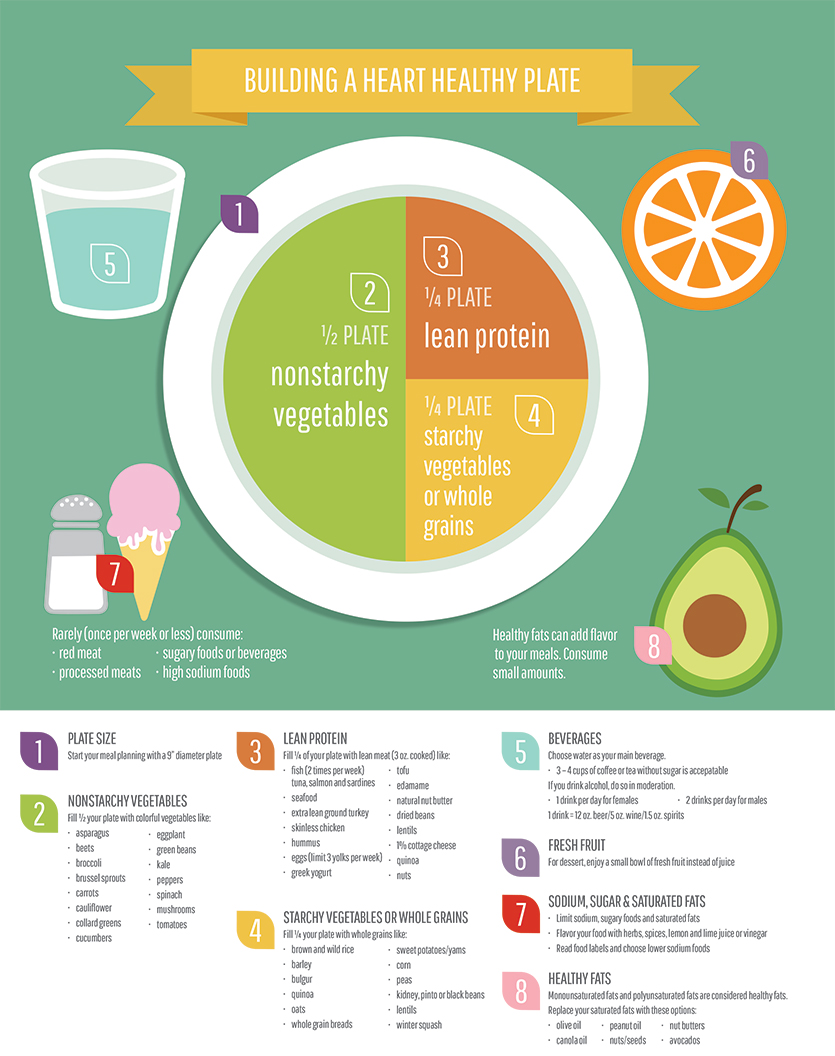
Dietitian tip: We recommend starting lunch and supper by filling half your plate with non-starchy vegetables. Enjoy a side of fruit for dessert and this will help achieve the fiber goal. Fill up on plants for your heart!
What changed with the new recommendations?
Protein
One of the new recommendations is prioritizing protein at each meal and increasing the amount of protein one needs overall from 0.8g/kg of body weight to 1.2-1.6g/kg of body weight per day. It also emphasizes the variety of protein from animal sources, including eggs, poultry, seafood and red meat, while later mentioning the concept of obtaining some of your protein intake from plant sources, such as beans, lentils, legumes, nuts, nut butters, seeds and soy. Protein recommendations are very individualized. Protein needs vary based on age, sex, health status, activity level, weight loss goals, medications, etc.
Dietitian tip: We recommend you seek advice from a registered dietitian nutritionist (RDN) if you are interested in what amount you should be eating, but always prioritize plant protein (beans, nuts, legumes, tofu, tempeh, seeds, etc.) and lean animal sources, such as fish (i.e. wild-caught salmon), chicken breast, turkey breast and low fat dairy (Greek yogurt, 1% cottage cheese, etc.).
Fat
The guidelines depict whole milk and discuss butter and beef tallow in the recommendations of acceptable foods. Butter contains 7g of saturated fat for 1 tablespoon and beef tallow has 6g saturated fat for 1 tablespoon. Saturated fat has been found to be the main dietary cause of elevated LDL and lipid levels. Milk can vary from 5g in whole milk to 0g in skim milk. Research shows dairy consumption overall has been linked to a decreased risk of mortality and major CVD events therefore our dietitians agree with the recommendation of 3 servings per day.
Some studies show dairy can also lower blood pressure as part of the DASH (Dietary Approaches to Stop Hypertension) Diet as well as type 2 diabetes. More recent studies show conflicting information debating if the saturated fat in milk affects lipid levels the same as the saturated fat in red meat; however more research is needed in this area before cardiology recommendations change.
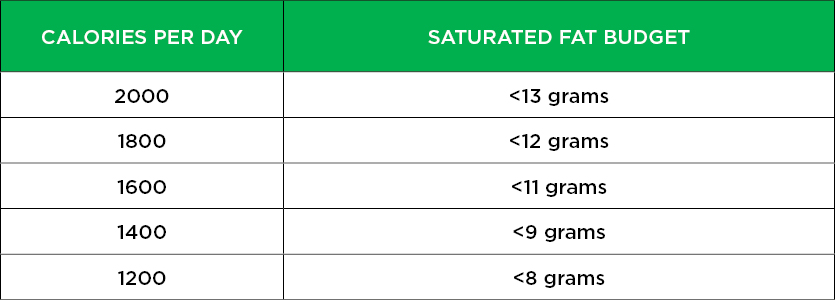
Dietitian tip: At the end of the day, saturated fat guidelines with the American Heart Association and the Parkview Heart Institute remain at no more than 6% of your calories every day, regardless of the saturated fat source. As we describe this to our patients, you have a saturated fat budget, so you spend it how you wish (knowing the less you eat, the better).
Below is a chart showing how many grams that would be equivalent to, based on the number of daily calories consumed:
Many opt to forgo the cup whole milk (5g) and opt for skim milk (0g) in order to enjoy a slice of full-fat cheese (5g) for “melting appeal” or perhaps splurge on a special treat of portion controlled regular ice cream to meet their saturated fat budget for the day. We know we would! Red meat and pork remain limited on our heart healthy guidelines as well. These meats increase inflammation in the body, are higher in saturated fats and have been shown to elevate atherosclerotic risk factors. Our goal for these foods is no more than 6- 9 ounces per week. Butter and beef tallow, as well as coconut oil (12g saturated fat/tablespoon), should also be limited for heart health.
Confusion looms
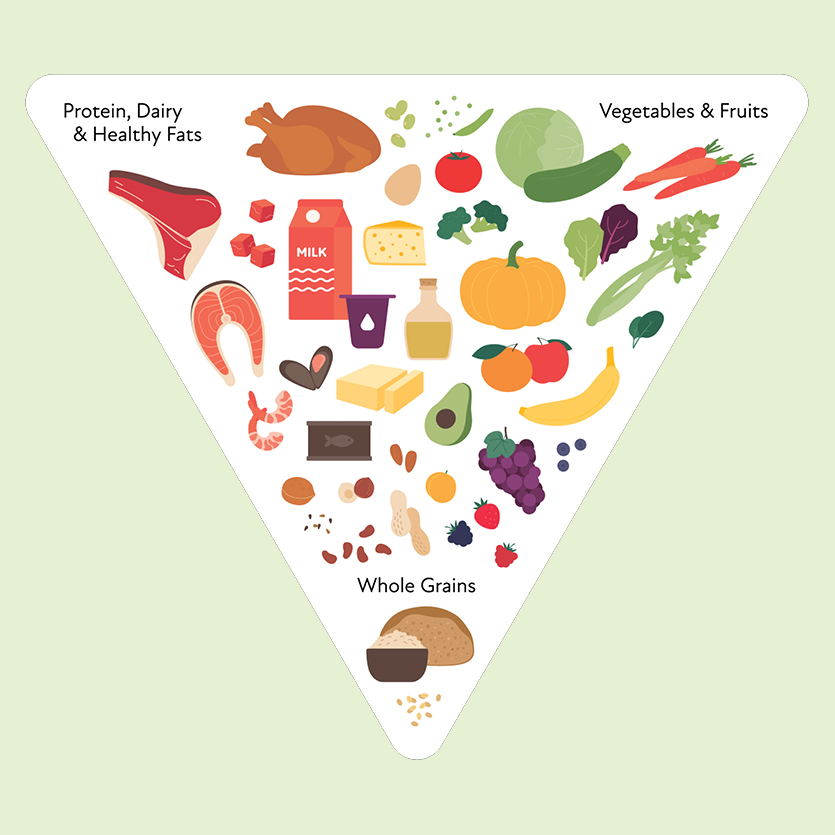
As you look at the visual of the upside-down pyramid, the random serving sizes of the different foods seem a bit puzzling. On one section, it appears a serving of red meat could be as large as a 12-ounce ribeye or even a full turkey. Yet, in another section a serving of strawberries appears as if it is only 2 berries and a serving of blueberries is only 4. The pyramid depicts three food groups: protein/dairy/healthy fats (yet shows a mix of fats that would be high in unhealthy fat such as a full stick of butter, whole milk, cheese, ribeye and ground beef); vegetables and fruits; and then whole grains at the very bottom. Sodium, or the salt shaker, is vaguely mentioned as well, leaving unclear guidance to usage.
Dietitian tip: For a heart-healthy lifestyle, the goal should be around 2,300mg of sodium per day, which would be met by avoiding all types of salt (table salt, Himalayan seat salt, Celtic salt, etc.) as they have roughly 2,100mg of sodium in just 1 teaspoon. Many foods we consume, such as bread or other grains, often already contain sodium therefore there’s no need to add more at the dinner table. Learn to season foods with fresh herbs and spices.
The bottom line
At the end of the day, we will leave you with these tips that apply to everyone:
- Eat whole foods
- Choose fats wisely
- Watch added sugars
Your personal diet is just that – made for you. It is different for everyone. Your diet recommendations depend on your current health, activity level, medications, food budget, preferences, past experiences, family/life schedule and so many other factors that only apply to you! A registered dietitian nutritionist (RDN), including the Parkview Heart Institute dietitians, are considered the “nutrition experts” and can help you determine what is right for you.
Did you know that many insurance companies now cover benefits to seek help from a registered dietitian nutritionist? If you are interested in learning more about what a RDN can offer you, reach out the PHI dietitian team at 260-266-5730. If we are not the right specialty for you, we can answer your questions and get you to the right dietitian within the Parkview Health system!
“Eat food. Not too much. Mostly plants.” – Michael Pollan
Better health care is in your genes.
Your health is personal. Your healthcare should be too. DNA Insights, Parkview’s community health research program, is now offering no-cost genetic screening, so you can better understand your genetic health risks and take actions towards a healthier future, for you and your family.
Your privacy is our priority. We take great care to keep all participants' information safe and secure and will not share personal data beyond what you have consented to.
Learn more about DNA Insights or get started today.
Have you already received your DNA Insights results? Share your DNA Insights story here.